THE REAL STORY OF LITTLE ATHANASIOS
Little Athanasios was born after a very difficult and long natural labour, because he was overweight. The middle cerebral artery was thromboses and his brain was deprived of oxygen for a long time. This condition led to cerebral palsy. He was the forth child of the family and the family, who wanted to help all its children, decided to cryopreserve Athanasios umbilical cord blood, just in case. At that moment they did not realise that one day these cells would be very helpful for someone in the family. Soon after his birth, Athanasios presented signs of cerebral palsy and the family started treatment using all the known methods. At age of 20 months his mother was informed that a child with the same as Athanasios’ problems was treated in the USA by using its own stem cells that her family had preserved during her birth. The mother remembered that she had cryopreserved Athanasios cells and asked Biohellenika if Athanasios could be a candidate to take his cells. Since then a long procedure started: Biohellenika and Duke University exchanged information about stem cells banking and medical records. Finally after making all the preliminary tests the family and the cells were transferred to Duke University for the infusion. The family stayed in the USA for 4 days and Athanasios was infused with his own stem cells. The procedure was executed safely and without any side-effect. Later Athanasios came back and reported regularly to the neurologists that took care of him during his stay in Duke University. The stem cells were cryopreserved in 3 cryovials. All the quality controls after post-thaw were done in Biohellenika’s labs. The viability of the cells was 96% and for this reason Athanasios took only the cells from two of the cryovials. The third remains in Duke University for future use in case it is needed. Having experience from the first child treated, we expect improvement after three months.
The University of Georgia announced that it will start a clinical trial with 40 children with cerebral palsy that have cryopreserved their own stem cells in collaboration with a private cord blood bank. The trial will include children until 8 years old that already have cryopreserved umbilical cord blood stem cells. At the moment the treatment includes only autologous use of stem cells, even in the case of fully matched sibling donor.
Danae’s real story.
Autologous administration of stem cells, stored by Biohellenika for the treatment of Danae who suffered from cerebral palsy.
Biohellenika administered an umbilical cold blood stem cell sample to a 31 month old child suffering from cerebral palsy. This autologous administration is a unique success for Biohellenika, the largest Family Bank in Greece, since it is the first unit of cord blood that has been cryopreserved in a Greek bank and administered successfully from a University Hematology clinic of USA.
The cerebral palsy was caused due to complications during birth, resulting to the insufficient oxygen supply to Danae’s brain for sometime and the baby presented problems in muscle tone and strength during the first months of its life. The family addressed Biohellenika directly and the head of the scientific board Dr. Kouzi-Koliakou communicated with the Hematology clinic of Duke University USA.
Biohellenika sent the complete file of cryopreservation of the baby’s placenta blood to the clinic. The file was examined closely and approved by the doctors of the clinic. Then, the medical team requested the transport of the child and the sample. The initial blood collection by the obstetrician was enough, although it was a twin birth. This had as a result the number of the cryopreserved stem cells to be sufficient for transplantation. The stem cells administered to the child were analogous to a double of the weight the child had. In autologous use the administration of a large number of stem cells is useful for the patient, as it has a better therapeutic outcome and there is no fear of rejection, as the child uses its own stem cells that are completely compatible.
The stem cells were sent in a special transfer container that is called Voyager. The stem cells can safely remain in the Voyager up to 23 days, a period which is sufficient for transport to any place of the world.
The stem cells were cryopreserved in five cryo-vials. Two of them contained a smaller volume for quality tests before the thawing. The total number of stem cells the vial contained was more than enough.
The administration of the stem cells was scheduled for 28/7/09. A day before the transplantation the child was examined by a neurologists’ team that assessed and logged all clinical findings for future reference. All cryo-vials were thawed and the cells were administered to the child intravenous and under the surveillance of all its vital signs. The child did not present any complications during the administration of the cells that lasted 10 minutes. Immediately after the transplantation, the family left the hospital and came back the following day for a new check up from the doctors. The following day they left the hospital and today they are in Greece. Continuous improvement in the movement, speech and communication is noted every day. The child remained in USA only three days, treated as outpatient and didn’t pass any night in the hospital.
According to the experience of the doctors a significant improvement of the movement, decrease of the muscle spasticity and improvement in communication is expected after the third month. Up to day the child has presented clear signs of improvement as she is now able to speech more fluently, communicate with her family, stay and walk and generally she has more confidence in starting and finishing actions.
The administration of the cells was safe and no side effects were noticed to Danae. Biohellenika cryopreserves clear nucleated cells, after almost full depletion of red blood cells, so the amount of cryoprotectant DMSO is very low. Because of that the side effects like vomiting, nausea and changes in the blood pressure are very rare. The child during the whole procedure was completely calm and cheerful.
Larger volume of the cryopreserved sample, needs larger amount of the cryo-protectant DMSO, thus the side effects are stronger. In Biohellenika the stem cells are cryopreserved in cryo-vials were a pure population of stem cells is stored, without impurities of red blood cells. This has as a result a smaller cryopreserved volume and therefore no unwanted side effects to the patients during administration.
The opportunity given to this family is due to the mother’s foresight, who persisted on new year’s eve to receive Biohellenika’s collection kit by any means, to the doctor’s conscientiousness who performed two big cord blood collections from the babies that were twins and born with a cesarean, something very difficult many times, and to Biohellenika’s personnel that on new year’s eve processed with the best possible way a sample that justified every ones efforts. All data lab obtained after the thawing of the sample in the laboratories of the Transplantation Unit of Dukes University showed a large number of cells of high grade of survival, clear from bacteria and viruses and with an intense capability of proliferation. The chances of improvement of the young patient are very high. Up until today Biohellenika has administered with success more than 30 samples to patients for different diseases.
On 26th of January another child with the same problem will take the same way for treatment.
DALLAS HEXTELL
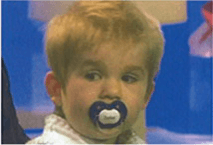
Stem cells from Dallas umbilical cord blood were the only hope for the family, stated Cynthia Hextell, Dallas mother, who was suffered from cerebral palsy since birth and transplanted with its own stem cells. The family never forgets the day that Dallas was diagnosed with cerebral palsy. It was tragic, Dallas did not even sit nor had sight and the only way for him to communicate was endless crying. Soon after birth the parents realized that something was wrong with Dallas. Fortunately Dextells had cryopreserved Dallas umbilical cord blood stem cells, for just in case and they never believed that they will be used in the future, because of Dallas sickness. Their decision then was proved valuable and wised today. On the age of 18 months old Dallas received its cells by a simple procedure. Retells did not know what they will expect from this treatment, but fortunately they did not wait for along. Dallas therapist, Polly Harlan noticed serious changes soon after the transplantation. The first signs of Dallas improvement were the participation in family’s life, fillings expression and speech development. Lately he starts to stand, walk smile and be happy. Moreover he became a real boy. For Cynthia it was a miracle. The results were so impressive and fast and stem cells gave to Dallas and his family the opportunity for a real life.
Doctors now are looking to expand the therapeutic applications of stem cells to others cases like Dallas. According to Dr David Harris, Professor of Immunology in Arizona University “ stem cells from the umbilical cord blood is the new hope for the children with cerebral palsy, since they have the ability to insert into brain’’ Retells family is grateful for their decision to bank Dallas stem cells, since this action gave them a hope for Dallas future. In cerebral palsy, as a result of shortage in oxygen, the child’s umbilical cord blood stem cells can improve its life, when they were infused during the first two years of life.
Hextells family wants to inform the future parents for the benefits of stem cells banking, because nobody knows when they can be used
KEEGAN & KELDAN D0HENEY
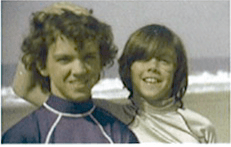
Your son suffers from ‘’leukaemia‘’. It is very painful for somebody to hear this diagnosis, but Wendy Doheney had to hear two times. The first time Keegan was just two years old. Doctors initially put Keegan’s leukaemia in remission, and Doheneys were a little happy. The second time was three years later. ‘’Keegan was in school, kindergarten, and me in home’’ Wendy remembers. ‘’And suddenly I had this filling, that something was going wrong. I called the Keegan’s doctor, expressed my filling and she thought that I lost my mind. There were no sign of wondering, but just simply I knew. Unfortunately Wendy’s instinct was proved right and keegan’s leukaemia return. Fortunately this time Doheneys had cryopreserved the little brother’s Keldan umbilical cord stem cell. If siblings were histocompatible, then Keldan’s stem cells would be use to treat Keegan’s leukaemia. ‘’We were so relieved, because we banked Keldan’s stem cells’’ Wendy remembered. ‘’When I was pregnant we had be informed about stem cells and all the ‘’miracles’’ that happen by using them. We examine all the possibilities and we decided to bank, for just in case. The good news came very soon. The boys were compatible. The doctors transplanted Keldan’s stem cells to Keegan body and now Keegan is healthy, more than nine years. An excellent student and athlete, Keegan has a very special bond to his little brother Keldan. ‘’ My little brother saved my life’’ said. Because of him now I am here, alive.
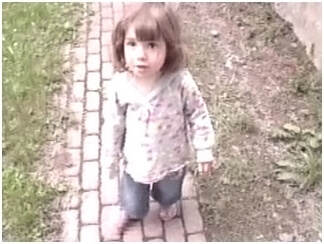 When Chloe Levine was 9-months-old, her parents noticed she couldn’t hold her bottle with her right hand.
That wasn’t her only developmental setback. Chloe, of Pinetop, Ariz., was unable to raise both hands above her head, and she could not crawl.
At 12 months, a CAT scan showed a portion of the left side of Chloe’s brain had not developed and contained fluid. Seeking answers, Chloe’s parents, Ryan and Jenny Levine took their daughter to a neurologist who diagnosed the toddler with right-side hemiplegic cerebral palsy.
“The cerebral palsy had only affected the right side of her body,” Jenny Levine said Monday morning on FOX & Friends. “The neurologist told us we were looking at 17, 18 years of therapy.”Click here to watch Dr. Manny Alvarez, managing health editor of FOXNews.com, speak with the Levines on FOX & Friends.That was when the Levines heard about an experimental procedure at Duke University in North Carolina where children with cerebral palsy were infused with their own cord blood stem cells in an effort to heal and repair damaged brain tissue.The Levine’s remembered they had banked Chole’s cord blood when she was born.“It was a miracle,” Alvarez said Monday on FOX & Friends. “I congratulate you for banking her cord blood. Stem cells are a new field of medicine and they certainly can rejuvenate the tissue.”Two months ago, Chloe, 2, received an infusion of her own stem cells and her progress is remarkable, said her father, Ryan Levine.“Her therapist said she’s made a 50 percent recovery,” he said. “She can walk, run, and do sign language with her right hand.”“It’s a miracle,” agreed Jenny Levine. “To hear your baby’s voice is a gift.”Alvarez said all parents expecting babies should consider cord blood banking.“There is no downside, this is material we used to throw away,” he said. “And while the blood is most useful for the child it came from, it can sometimes be used for siblings. This is a science that is evolving more and more.”Storing cord blood costs about $2,000, but Alvarez said he expects the price to come down in the near future. Cerebral palsy refers to any one of a number of neurological disorders that appear in infancy or early childhood and permanently affect body movement and muscle coordination but don’t worsen over time, according to the National Institute of Neurological Disorders and Stroke. It is caused by abnormalities in the parts of the brain that control muscle movements.